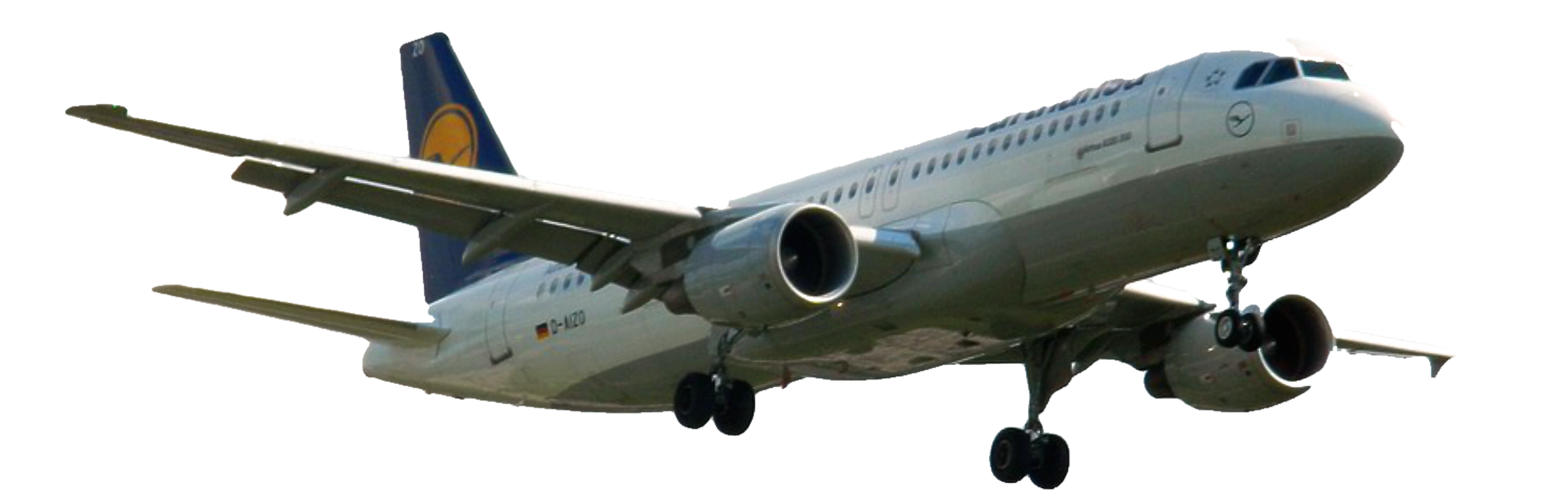
Turboprop versus Light Jet: Which Aircraft Should You Buy in Europe
You have made a list and now you have to decide which one to buy, a turboprop or a light jet.
This is a question that a lot of people who are buying an aircraft for the time ask.
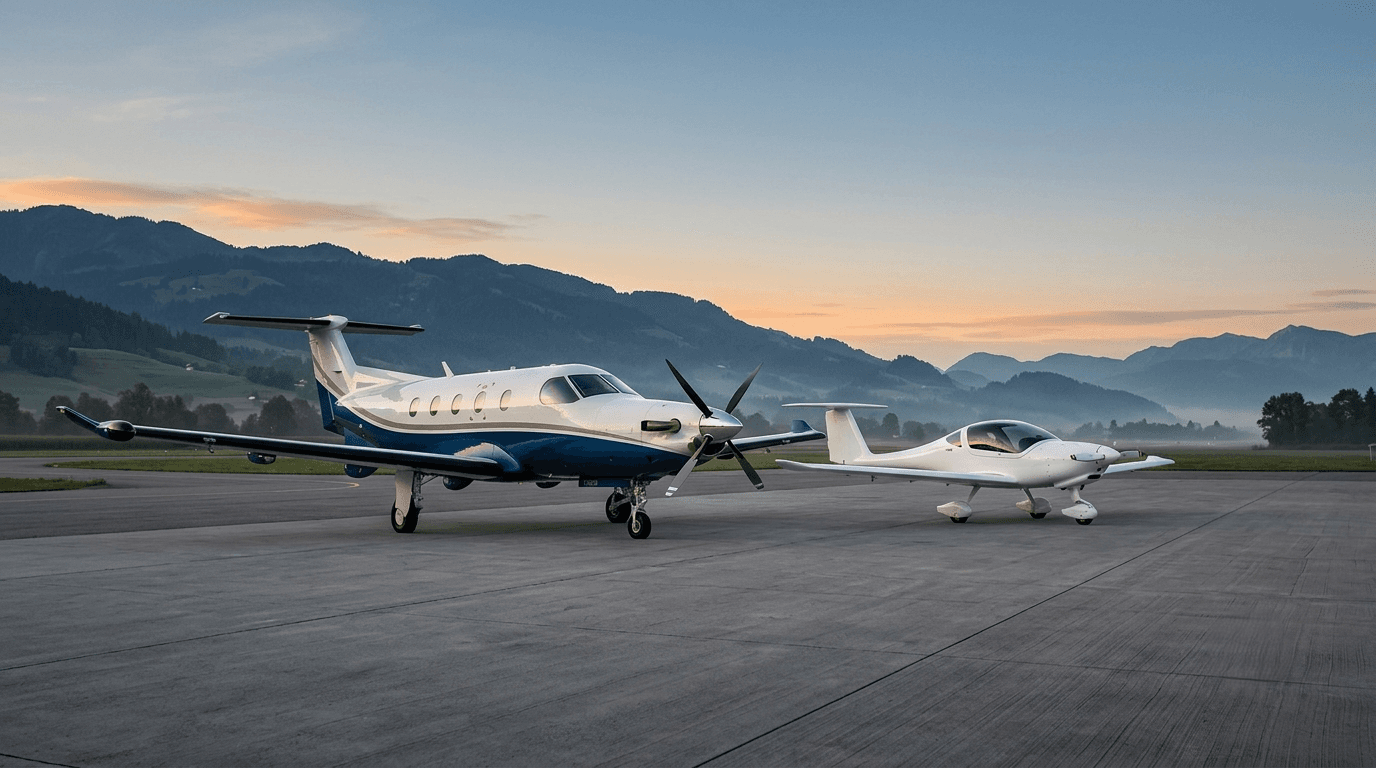
A friend of mine was going to buy a Phenom 300E to fly to his cottage in the country on weekends. He had a problem with the airstrip near his cottage which was only 2,800 feet long. When he was getting the aircraft checked before he bought it he found out that the jet would not be able to land safely. So he bought a Pilatus PC-12 instead.
This example explains it all. It is not about which aircraft looks better it is about what you want to use it for.
So let us go through the things you need to consider one by one.
Speed: How Time Are You Actually Saving
Light jets are faster that is a fact. Light jets usually fly between 380 and 460 knots while turboprops fly between 260 and 340 knots. If you are flying 500 miles the difference in speed will add about 30 to 45 minutes to your trip if you are in a turboprop.
This advantage does not matter as much on shorter trips. If you are flying than 300 nautical miles the difference between a turboprop and a light jet can be as little as 10 to 15 minutes.
So if you are mostly flying distances like from London to Paris or Amsterdam to Geneva the speed of the light jet does not matter that much. You are paying more for a few minutes.
Runway Access: The Real Deciding Factor for Buyers
This is where turboprops are better. The Pilatus PC-12 can take off from runways that're as short as 2,500 feet and the King Air 350 needs about 3,300 feet. Light jets need 3,500 to 4,500 feet to take off.
This means that turboprops can use a lot of airfields. If you need to fly into airports in Europe this might be the thing that helps you decide.
There is one exception the Pilatus PC-24 can take off from runways, which makes it special.
| Aircraft | Type | Min. Runway Required |
|---|---|---|
| Pilatus PC-12 | Turboprop | ~2,500 ft |
| King Air 350 | Turboprop | ~3,300 ft |
| Light Jets (typical) | Jet | 3,500 – 4,500 ft |
| Pilatus PC-24 | Jet (exception) | Unpaved capable |
Operating Costs: Where Turboprops Really Win
This is usually the thing that helps buyers decide. Turboprops cost 40 to 50 percent less to maintain than light jets. They also use two thirds the fuel of jets so it costs less to operate them.
If you fly 300 hours a year the difference in operating costs between a PC-12 and a Phenom 300E can be about USD 240,000 to USD 300,000 per year. That is a lot of money. If you do not need the speed of a jet you could use that money for things.
Turboprops also have parts so there is less that can go wrong. This means that they cost less to maintain and need to be fixed often.
| Aircraft | Type | Direct Operating Cost / hr |
|---|---|---|
| Pilatus PC-12 NG | Turboprop | USD 1,000 – 1,200 |
| King Air 350 | Turboprop | USD 1,400 – 1,800 |
| Phenom 300E | Light Jet | Significantly higher |
Altitude and Comfort: Where Jets Pull Ahead
Light jets are not just faster they also fly higher. They usually fly between 37,000 and 45,000 feet, which's above most weather. Turboprops fly between 25,000 and 31,000 feet so they are affected by the weather more.
If you fly distances or in bad weather this matters. Light jets are smoother and quieter which is a thing.
Range: Not What You Expect
A lot of people think that light jets always fly farther. That is not true. The Pilatus PC-12 can fly 1,803 miles and the King Air 350 can fly 1,806 nautical miles. Some light jets can fly a bit farther. Not that much.
So if you are mostly flying within Europe a turboprop can get you where you need to go.
Which One Fits Your Mission
Let us make this simple.
Choose a turboprop if you:
- Fly under 1,000 nautical miles per trip
- Need to use short or unpaved runways
- Care more about operating costs than saving a few minutes
- Need to carry cargo or want a flexible cabin
Choose a light jet if you:
- Regularly fly 1,000 to 2,000 nautical mile trips
- Need to save time
- Want to fly above the weather
- Want a quieter more comfortable cabin
If you want to know how much it costs to charter a light jet it usually starts at about USD 5,800 per hour.
A Quick Note on Resale and Demand
More and more people are interested in turboprops. This is not just a feeling. Charter companies are using turboprops and people who are buying their first aircraft often want a light jet. But both types of aircraft hold their value well so you do not have to worry about that.
If you want to compare aircraft you can look at our turboprop listings and light jet listings and filter by type and price.
Frequently Asked Questions
Is a turboprop always slower?
Yes turboprops are slower. On short trips the difference is not that big.
Can a turboprop really save me money?
Yes it can. The difference in operating costs can be hundreds of thousands of euros per year.
Do jets always need longer runways?
Yes they usually do. The Pilatus PC-24 can use unpaved runways.
Which one is easier to maintain?
Turboprops are simpler so they cost less to maintain.
Should I talk to a broker before deciding?
If you are not sure what you need a broker can help. They have experience with both types of aircraft.
Final Verdict
There is no one answer that's right, for everyone. If you fly distances and need to use small airfields a turboprop is a good choice. If you fly distances and need to save time a light jet might be better.
Before you decide think about what you need. If you have not done that yet our guide can help.
Once you know what you need you can look at our listings. Compare different aircraft. You can even talk to the sellers directly.
Elevate Your Aircraft Listings
Unlock premium features and boost your visibility. Get your aircraft in front of thousands of potential buyers worldwide with global reach.
View Pricing Plans